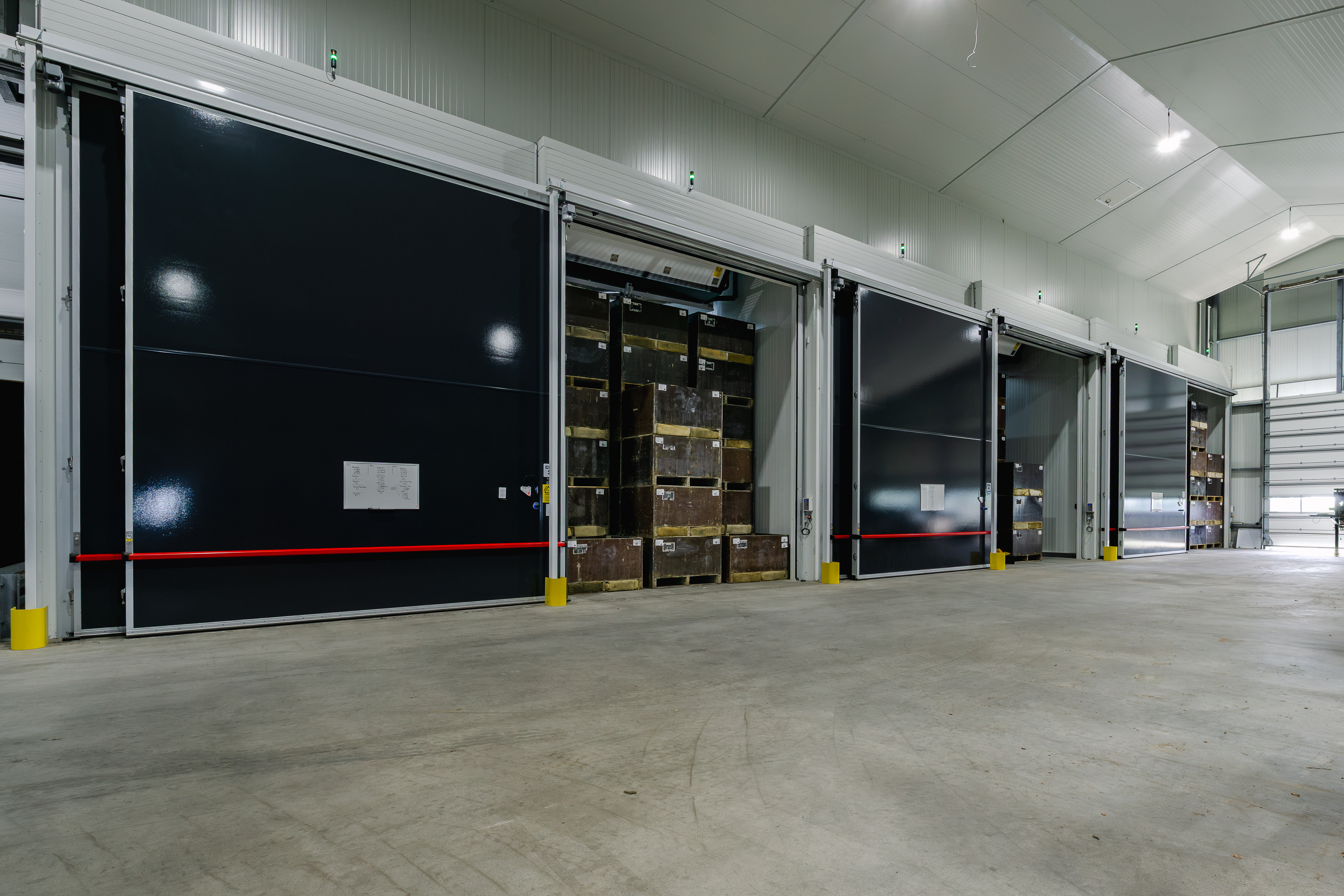
Creating space with horizontal doors: the herringbone layout
Large gastight doors are used to control tulip gall mite. These are often vertically opening doors. But what do you do if your hall isn’t high enough for vertical doors? Johan Muis explains how to save space with the herringbone layout.
“Horizontal doors slide faster than vertical doors and are also available in a manual version,” says Johan Muis, who has worked in sales at Salco for 42 years. “In a classic horizontal layout, you always need the full width of the door available on the wall to slide the door away. As mentioned before, this is usually not a problem in fruit storage, because the door is smaller than the cell.”
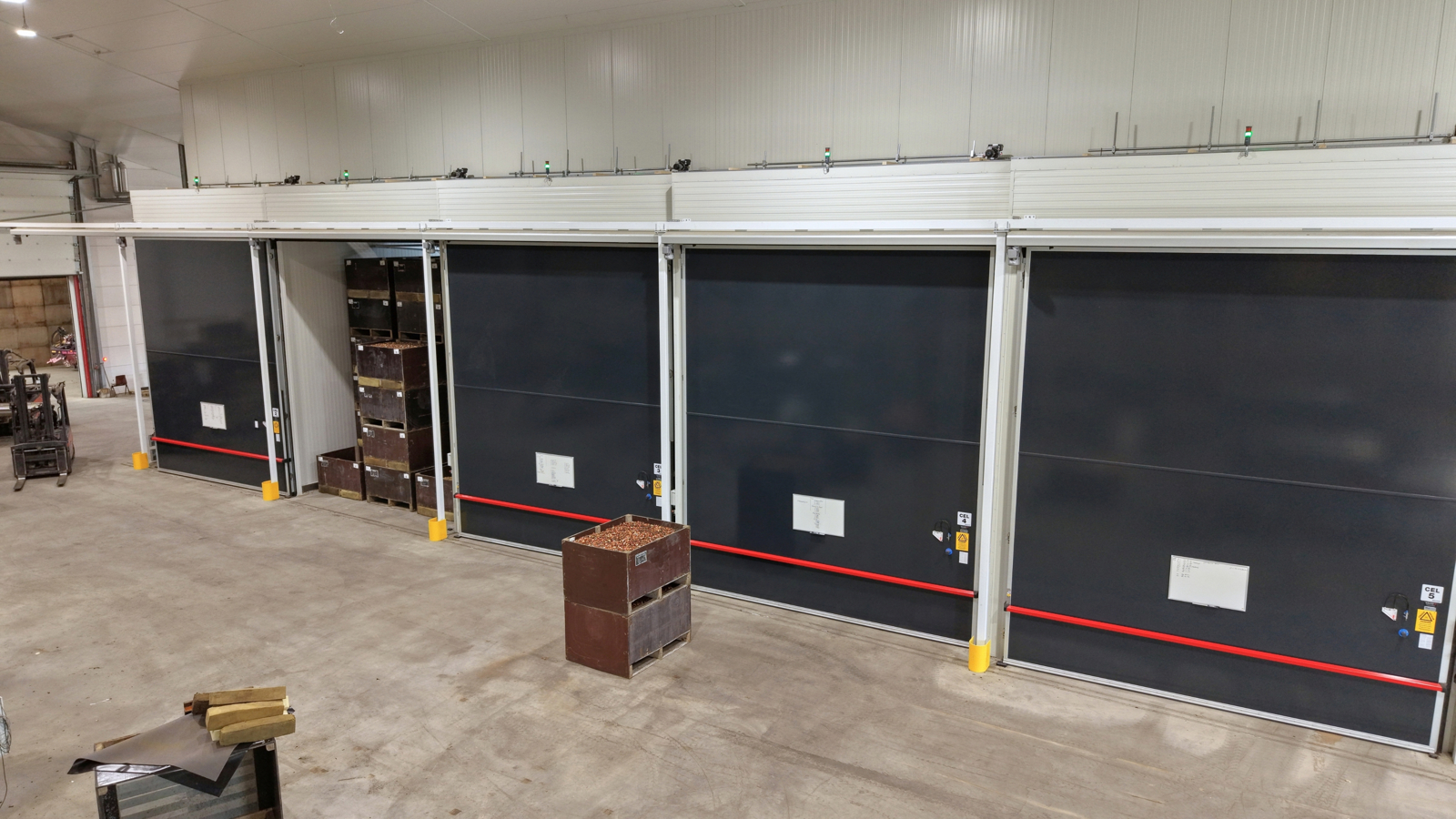
Driving crates in and out quickly
“But in cells for ULO storage of tulip bulbs, where crates need to be driven in and out quickly, the door covers the entire cell opening,” Johan continues. “To avoid losing space, we use a so-called herringbone layout. The cells are staggered, so that one door slides away in front of the door of the adjacent cell. With this solution, you can open half of the cells at the same time. The herringbone layout is ideal for spaces where there is no room for vertical doors.”
See how the herringbone layout works at this tulip grower:
Number of doors: 6 x KHG-1810
Dimensions: 5000 x 5900 mm (width x height)
Layout: herringbone, one door opens in front of the other
Application: storage and ULO treatment of tulip bulbs
Looking for the right door?
For gastight storage, cold and freezer rooms or other commercial spaces: we make the door that fits your situation. Contact us and we will go through the options with you.